





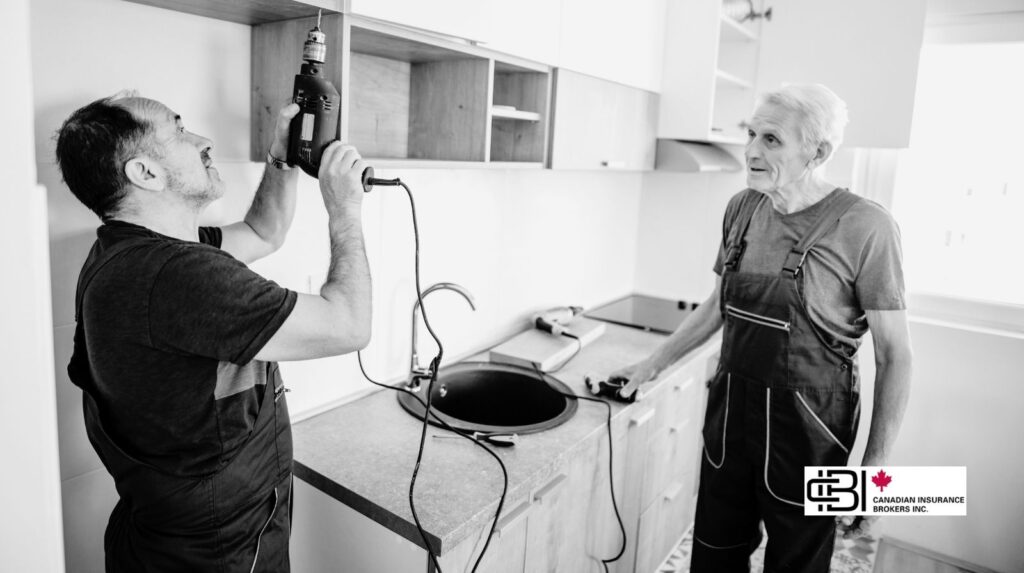
Two handymen assembling furniture indoors during a residential service job in Ontario

Handyman Insurance in Oakville

Handyman Insurance in Oakville

We provide professional insurance guidance for businesses and individuals through a secure and confidential quote process designed to be clear, efficient, and easy to begin.

Locally established in Oakville, Ontario

Coverage designed to match your business needs

Insurance options reviewed across markets and emailed to you

Handyman Insurance in Oakville

We provide professional insurance guidance for businesses and individuals through a secure and confidential quote process designed to be clear, efficient, and easy to begin.

localise.png

Locally established in Oakville, Ontario

coverage.png

Coverage designed to match your business needs

localise.png

Insurance options reviewed across markets and emailed to you

Handyman work in Ontario sits in a grey zone. It is not heavy construction, but it is not low risk either. Most jobs happen inside lived-in spaces, often around homeowners, tenants, or building staff. That alone raises the stakes.

In Oakville, handymen are working in tighter environments, higher-value homes, and buildings with more rules than ever. Insurance has quietly shifted from something optional to something expected. Many clients now ask for proof of coverage before they even discuss the scope of work.

This article is not about selling insurance. It is about explaining where risk actually shows up for handymen and how insurance fits into the day-to-day reality of running a small service business.

Where Problems Usually Start

Most insurance claims do not begin with major accidents. They start with small, ordinary moments:

  • A fixture cracks during removal.
  • Water leaks beyond the repair area.
  • A tenant trips while walking through an active job site.

None of these situations involve bad intentions. They are common outcomes of working in occupied properties. Once money is involved, expectations shift quickly, and informal conversations can turn into formal demands.

Ontario’s civil system allows homeowners, landlords, and property managers to seek compensation for property damage or injury. Many of these disputes never reach trial, but legal defence still costs time, energy, and money. This is where handyman liability insurance becomes relevant in a very real way.

Insurance as a Gatekeeper to Work

Handyman installing kitchen cabinets in an Oakville home while homeowner observes the work
Handyman work in occupied homes carries real insurance risk, where property damage or injuries can quickly lead to liability claims.

In Oakville and surrounding municipalities, insurance is often required before work even begins.

Property managers onboarding vendors usually ask for a certificate of insurance. Condo boards include insurance limits directly in service agreements. Even individual landlords increasingly want proof of coverage before granting access to a unit.

This is one of the biggest changes in the market. Handyman insurance policies are now part of the hiring process, not just something you think about after a claim. If you cannot show coverage, you may never get the job.

What Coverage Actually Responds When Something Goes Wrong

Handyman insurance is not one single policy. It is a combination of protections that respond to different types of problems.

The foundation is general liability insurance for handyman services. This is the coverage that responds when someone alleges your work caused property damage or bodily injury. It pays for legal defence and, when appropriate, settlements or judgments.

Other coverages deal with risks liability insurance does not touch, such as stolen tools or vehicle-related incidents. Many handymen assume everything is covered under one policy, which is rarely the case.

Here is a simple look at common handyman risks and how insurance applies:

Situation What Typically Happens Coverage That Applies
Damage to client property Client asks for repair or compensation General liability insurance
Injury on site Medical costs and legal claim General liability insurance
Tools stolen or damaged Work stops until equipment is replaced Tools and equipment coverage
Installation error Client claims financial loss or rework costs Professional liability or E&O
Accident while driving Vehicle damage or third-party injury Commercial auto insurance

These are not edge cases. They are the most common sources of claims for handymen.

When Disputes Turn Legal in Ontario

Most handyman disputes are resolved informally. Some are not.

Ontario courts regularly hear construction and handyman-related cases that show how responsibility and liability are assessed. A recent example is Walsh Construction Company of Canada v Toronto Transit Commission, 2024 ONSC 2782, decided by the Ontario Superior Court of Justice.

The case involved large financial claims tied to construction delays and responsibility. The court closely examined contractual obligations and who actually bore legal responsibility for the losses. Claims failed where there was no direct liability relationship.

While this case involved large infrastructure work, the principle applies to handymen as well. When disputes escalate, courts look at responsibility, contracts, and whether insurance exists to respond to losses.

For handymen, insurance often determines whether a dispute is manageable or financially damaging.

Cost Is Not the First Question, Even Though Everyone Asks It

The question always comes up early: how much does handyman insurance cost in Ontario? It is a fair question, and it deserves a clear answer.

For many handymen in Oakville, Halton Region, and across the GTA, basic commercial general liability coverage typically falls within a reasonable range. A solo handyman doing light repair or maintenance work may pay around $300 to $600 per year for a $1 million liability policy. Businesses that require $2 million in coverage, which is common for landlord and property management work, often see premiums closer to $500 to $1,200 annually.

Costs rise when you add:

  • Tools and equipment coverage
  • A work van or truck under a commercial auto policy
  • Employees or regular subcontractors
  • Higher-risk services such as structural or water-related work

The more important question is not the lowest price. It is whether the policy actually responds when a client claims damage or injury. Many handymen only discover gaps in coverage after a loss, when cost no longer matters.

If you want to review an existing policy, prepare for upcoming work, or better understand how coverage and cost fit together, you can schedule a meeting with James Inwood to talk it through.

Why Handymen End Up Needing Insurance Anyway

There is no single provincial rule that forces every handyman to carry insurance. That often leads people to assume it is optional.

In practice, handymen need insurance because:

  • Clients and property managers require it
  • Vendor contracts specify coverage limits
  • Ontario courts allow claims for damage and injury
  • One uninsured incident can wipe out years of profit

The risk exists whether insurance does or not.

Frequently Asked Questions

Questions Ontario Handymen Actually Ask

Not by statute, but many clients and contracts will not hire you without coverage.

Claims alleging bodily injury or property damage caused by your work or operations.

Yes. Homeowners can pursue civil claims for property damage or financial loss.

No. Personal insurance policies exclude business activities.

Many handymen carry $1 million to $2 million to meet client and contract requirements.

No. Tools require separate coverage.

Insurance advisor James Inwood with handymen working on a residential project in the background
James Inwood helps Ontario handymen understand how insurance protects their business when liability issues or claims emerge.

James Inwood is a Canadian insurance editor focused on business insurance in Ontario. Based in Oakville, he writes about liability exposure, claims realities, and how insurance applies to real work performed by handymen across the Greater Toronto Area and Halton Region. His approach emphasizes clarity, accuracy, and practical risk awareness for local businesses.

James Inwood, Insurance Broker
RIBO licensed | LinkedIn

Leave a Comment

Your email address will not be published. Required fields are marked *