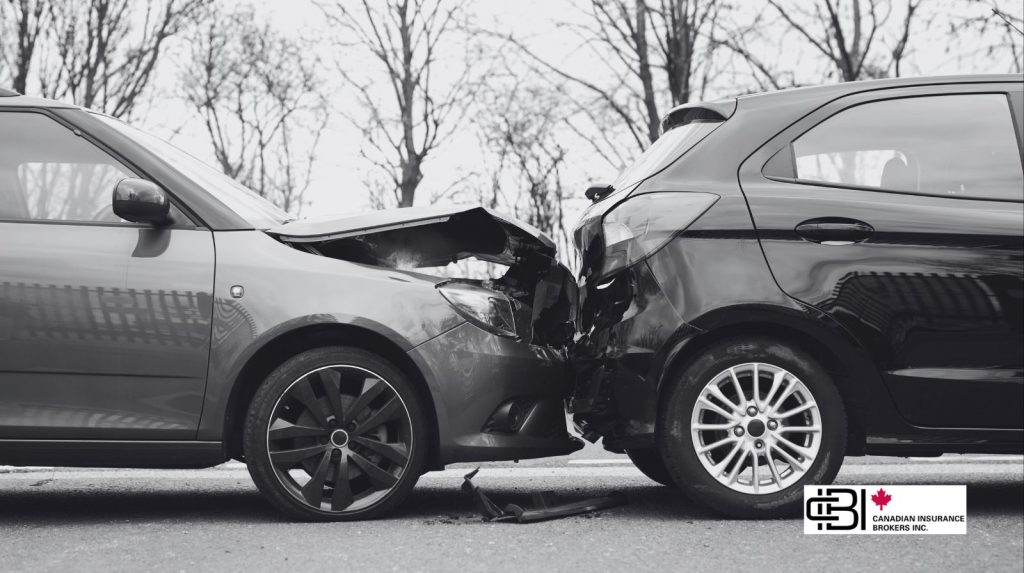






Rear-end car collision on a residential street illustrating the importance of Accident Forgiveness coverage in auto insurance

Accident Forgiveness: What It Really Does for Your Car Insurance

Accident Forgiveness: What It Really Does for Your Car Insurance

We provide professional insurance guidance for businesses and individuals through a secure and confidential quote process designed to be clear, efficient, and easy to begin.

Locally established in Oakville, Ontario

Coverage designed to match your business needs

Insurance options reviewed across markets and emailed to you

Accident Forgiveness: What It Really Does for Your Car Insurance

We provide professional insurance guidance for businesses and individuals through a secure and confidential quote process designed to be clear, efficient, and easy to begin.

localise

Locally established in Oakville, Ontario

coverage

Coverage designed to match your business needs

localise

Insurance options reviewed across markets and emailed to you

Accident forgiveness is one of those features that sounds simple until you actually need it.

Most drivers first come across it when reviewing a quote or renewal. It is often positioned as a helpful add-on, something that protects you if something goes wrong. In Ontario, however, where insurance pricing is heavily tied to your driving record, it can have a much larger financial impact than people expect.

The difference is not just whether you have it. It is whether you understand what it actually protects, how it behaves over time, and where its limits are.

At a Glance: Accident Forgiveness

  • Accident forgiveness is an optional add-on to car insurance
  • It protects your premium after your first at-fault accident
  • It does not remove the accident from your driving record
  • It must be in place before an accident happens
  • It usually applies only once
  • It is typically available to drivers with a clean record
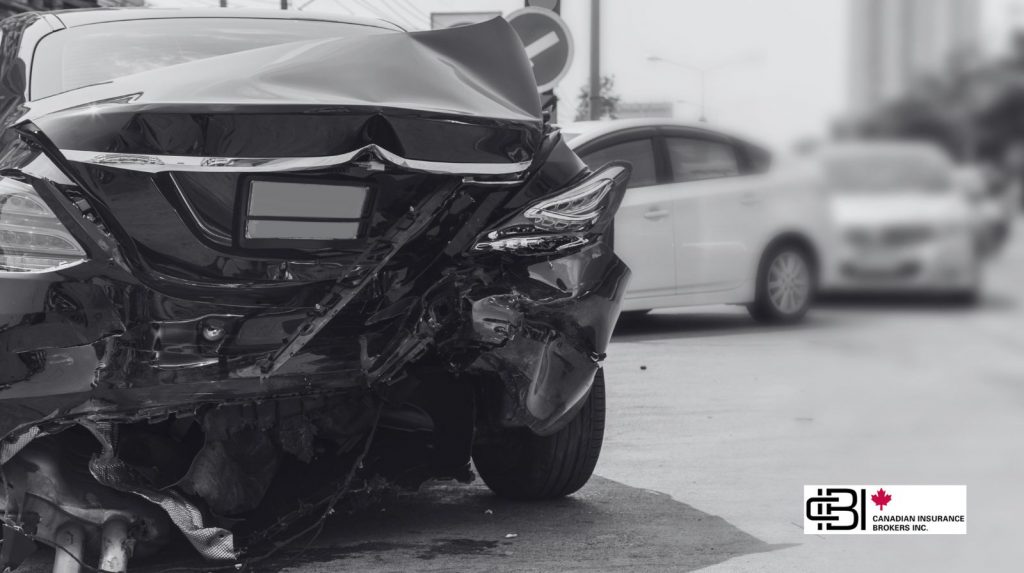
Severely damaged rear bumper after a traffic collision highlighting why Accident Forgiveness is valuable for drivers
Even minor collisions can lead to costly repairs, making accident forgiveness a valuable optional coverage.

What Accident Forgiveness Actually Means

Accident forgiveness is a type of auto insurance endorsement that protects your premium after your first at-fault accident.

From an insurance standpoint, it does not change the outcome of the accident itself. The claim is still processed, fault is still assigned, and the incident remains on your record. What changes is how your insurer treats that accident when calculating your premium.

Without accident forgiveness, an at-fault accident signals higher risk, which often leads to a noticeable increase in your insurance cost. With it, that increase is avoided, at least with your current insurer.

How Accident Forgiveness Works in Real Policies

Accident forgiveness only applies if it is already part of your policy before an accident occurs.

When a claim happens, everything proceeds normally at first. The insurer assesses the accident, determines fault, and processes the claim. The difference appears at renewal.

Instead of increasing your premium, your insurer maintains your rate as if the accident had not occurred. This protection is typically limited to one accident, and after it is used, future claims are treated normally.

Why Location Matters More Than Most Drivers Think

Accident forgiveness becomes more valuable depending on where you live in Ontario.

Insurance premiums are not the same across the province. They vary based on local risk factors, which directly influence how much your premium could increase after an at-fault accident. In higher-risk areas, even a single claim can have a much larger financial impact over time.

Some of the main factors that drive these differences include:

  • Collision frequency
  • Theft rates
  • Traffic density
  • Claim severity

Even if your driving habits are the same, your location alone can significantly change your insurance costs.

Real Cost Differences by City in Ontario

To understand the real impact of accident forgiveness, it helps to look at how premiums vary across Ontario.

Recent estimates show:

City Low Estimate ($) High Estimate ($)
Brampton 3,300 3,800
Toronto 2,200 2,800
Mississauga / Vaughan 2,200 2,450
Oakville / Milton 1,800 1,900
Barrie / Windsor 1,850 1,900
Ottawa / Kingston 1,500 1,600

Premiums have also continued trending upward, with increases of roughly 4%+ annually in recent years.

What This Means for Accident Forgiveness

The value of accident forgiveness is not just about percentages. It is about real dollars over time.

In lower-cost cities, a premium increase after an accident may be noticeable but manageable. In higher-cost areas like Toronto or Brampton, the same increase becomes much more significant.

For example:

  • A 20% increase in Toronto could mean $500 to $1,000 more per year
  • Over several years, that can add up to $2,000 to $5,000+ in total impact

This is why accident forgiveness becomes more relevant in:

  • Dense urban areas
  • High-traffic commuter regions
  • Cities with higher claim and theft rates

In lower-cost regions, the protection still applies, but the total financial difference is smaller.

What Happens Without Accident Forgiveness

Without accident forgiveness, the financial impact of an at-fault accident extends well beyond the initial claim.

Your insurer reassesses your risk, which typically results in a higher premium. That increase can remain in place for several years.

The real cost is not just immediate. It is cumulative.

  • A $700 increase over 4 years = $2,800 total impact
  • A $1,000 increase over 5 years = $5,000 total impact

This is where accident forgiveness becomes more strategic than optional.

If you have an impaired driving conviction, it can significantly affect your car insurance premiums in Ontario and limit options like accident forgiveness.

How Accident Forgiveness Fits Into Your Policy

Accident forgiveness is often misunderstood because it sits outside traditional coverage types.

It does not replace collision, comprehensive, or liability coverage. Instead, it works alongside them by protecting your future pricing.

It is best viewed as a financial buffer rather than a form of protection against damage.

Is Accident Forgiveness Worth It?

For many drivers, it can be.

It is most valuable for drivers who have built a clean record and want to protect their current premium. The longer you have gone without a claim, the more there is to protect.

It may be less useful for drivers who already have multiple claims or who plan to switch insurers soon.

The decision comes down to whether protecting your current rate is worth the added cost.

What Drivers Often Overlook

There are a few details that are easy to miss.

Accident forgiveness:

  • Only applies with your current insurer
  • Must be added before an accident
  • May not apply to all drivers on the policy
  • Does not prevent other premium increases

Even with accident forgiveness, your premium can still change due to broader market factors.

Get a quote to review accident forgiveness based on your city and driving profile.

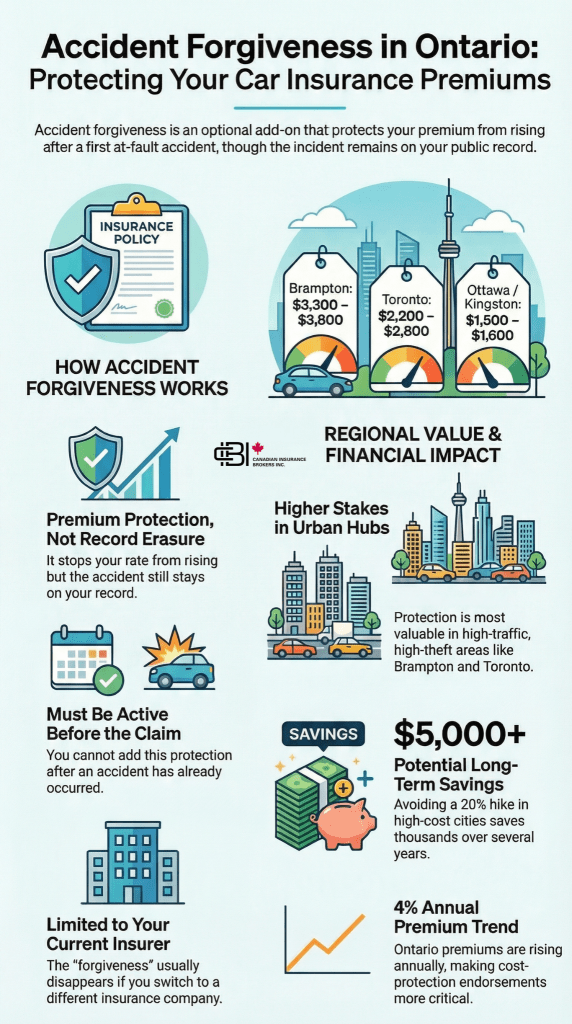
Visual: Accident Forgiveness in Ontario

accident forgiveness in Ontario
A visual guide showing how accident forgiveness protects premiums and provides long-term savings for Ontario drivers.

Why Work With James Inwood

Accident forgiveness is often presented as a simple add-on, but its value depends on how it fits into your overall policy and location.

James Inwood works with drivers across Ontario, including Toronto, Oakville, and the GTA, to explain how endorsements like accident forgiveness actually affect long-term premiums. This includes comparing insurers, reviewing policy structure, and helping clients understand how coverage performs after a claim.

Get a quote or book a call with James Inwood to review your car insurance.

Frequently Asked Questions

No, it generally must be in place before the accident occurs.

Usually not. A new insurer can still consider your claims history.

Yes, but eligibility depends on your driving record and policy details.

Not always. Some insurers limit it to the primary driver.

James Inwood presenting Accident Forgiveness coverage to clients after a car accident scene
James Inwood explains how accident forgiveness can prevent premium increases after a first at-fault accident.

James Inwood is an Ontario-based insurance broker who works with drivers across Toronto, Oakville, and the GTA to help them understand how insurance decisions affect long-term costs.

He focuses on practical advice, helping clients understand how claims impact premiums and how features like accident forgiveness fit into a broader insurance strategy.

James Inwood, Insurance Broker
RIBO licensed | LinkedIn

Leave a Comment

Your email address will not be published. Required fields are marked *