
Buying a Restaurant in Ontario (Insurance Checklist)
We provide professional insurance guidance for businesses and individuals through a secure and confidential quote process designed to be clear, efficient, and easy to begin.
Locally established in Oakville, Ontario

Coverage designed to match your business needs

Insurance options reviewed across markets and emailed to you

Buying a Restaurant in Ontario (Insurance Checklist)

We provide professional insurance guidance for businesses and individuals through a secure and confidential quote process designed to be clear, efficient, and easy to begin.

Locally established in Oakville, Ontario

Coverage designed to match your business needs
Insurance options reviewed across markets and emailed to you
Buying an existing restaurant in Ontario can be faster than starting from scratch, but it also means inheriting existing risks. Equipment may be aging, past claims may affect insurance, the lease may require specific coverage, and alcohol service can add licensing and liability considerations.
Insurance should be reviewed before closing, and buyers should not assume the seller’s policy will transfer. Coverage should be arranged for the new owner, legal entity, operations, property, employees, and other exposures.
Restaurant Buying Checklist: What to Review Before Closing
Before buying an existing Ontario restaurant, gather the key information that can affect insurance and pricing.
- Current insurance and available claims history
- Lease and building details
- Kitchen equipment and replacement values
- Fire suppression and exhaust systems
- Annual sales and alcohol sales
- Seating capacity and operating hours
- Number of employees
- Delivery, catering, or off-site operations
- Food inventory values
- Renovations and leasehold improvements
- Security and alarm systems
- WSIB information
- Liquor licence status, if applicable
The goal is to identify major insurance issues before the purchase closes.
Does Restaurant Insurance Transfer to the New Owner?
Usually, a buyer should not assume that it does. A commercial insurance policy is issued based on the named insured, legal entity, ownership, operations, revenue, property, claims history, and other underwriting information.
When ownership changes, the new owner should arrange insurance for the new business structure and effective date. This becomes particularly important when the transaction involves:
- A new corporation
- An asset purchase
- A change in restaurant concept
- New operating hours
- New alcohol service
- Renovations
- Additional delivery
- Different annual sales
- New equipment
- Changes in staffing
Ideally, the new policy should be confirmed before the closing date so there is no unintended gap in coverage.
Restaurant Insurance Closing Checklist
Five insurance questions are worth answering before you become responsible for the restaurant.
What Insurance Do I Need When Buying a Restaurant?
Restaurant insurance is normally made up of several coverages rather than one standalone policy.
Depending on the operation, the buyer may need to review:
- Commercial General Liability
- Commercial property insurance
- Restaurant equipment coverage
- Food spoilage or contamination coverage
- Product liability
- Liquor liability
- Business interruption
- Equipment breakdown
- Crime coverage
- Cyber insurance
- Commercial auto
- Employment-related coverage where applicable
James Inwood’s guide to what insurance restaurants need provides a broader explanation of restaurant insurance once the purchase is complete.
Check the Restaurant's Claims History
Claims history is one of the most important insurance due diligence items when buying an existing restaurant.
Ask the seller for available information concerning previous:
- Kitchen fires
- Grease fires
- Water damage
- Sewer backup
- Equipment breakdowns
- Food contamination incidents
- Slip-and-fall claims
- Customer injuries
- Liquor liability incidents
- Theft or robbery
- Employee dishonesty
- Cyber incidents
A history of losses does not automatically mean the restaurant cannot be insured, but it can raise questions from insurers.
Review the Commercial Lease Before Arranging Insurance
If the restaurant operates from leased premises, obtain the complete commercial lease before closing.
Restaurant lease insurance requirements can specify:
- Required Commercial General Liability limits
- Additional insured wording
- Property insurance obligations
- Tenant legal liability requirements
- Coverage for leasehold improvements
- Business interruption requirements
- Deductible responsibilities
- Who insures specific equipment
- Who is responsible for glass or signage
- Requirements for Certificates of Insurance
The buyer’s policy needs to satisfy the actual lease rather than relying on what the previous restaurant owner carried.
Commercial Property Insurance for Restaurant Buyers
Determine exactly what physical property is included in the transaction. A restaurant purchase can include:
- Ovens
- Fryers
- Grills
- Refrigerators
- Freezers
- Walk-in coolers
- Dishwashers
- Exhaust systems
- POS terminals
- Computers
- Tables and chairs
- Bar equipment
- Smallwares
- Signage
- Décor
- Leasehold improvements
The purchase price of used equipment is not necessarily the same as the amount required to replace that equipment after an insured loss.
Check the Commercial Kitchen and Fire Protection
Ontario’s Fire Code requires cooking operations producing smoke or grease-laden vapours to have exhaust and fire protection systems in accordance with NFPA 96, subject to the applicable provisions and approvals.
Before purchasing, review items such as:
- Exhaust hood
- Ductwork
- Fire suppression system
- Fryers
- Cooking appliances
- Gas equipment
- Electrical equipment
- Portable extinguishers
- Maintenance records
- Cleaning records
- Previous fire incidents
This is both a safety and insurance issue. If the restaurant has been renovated or the cooking operation is changing, discuss those changes with the appropriate professionals and insurer before opening.
Check the Age and Condition of Restaurant Equipment
Equipment deserves its own review because a restaurant can depend heavily on refrigeration, electrical systems, HVAC, boilers, and cooking equipment.
Ask:
- How old are the refrigeration units?
- When were major appliances installed?
- Is equipment owned or leased?
- Are maintenance records available?
- Has equipment previously broken down?
- What equipment is included in the sale?
- What would it cost to replace today?
Equipment breakdown insurance can address certain sudden mechanical or electrical breakdowns, depending on the policy.
It should not be treated as a substitute for maintaining aging restaurant equipment.
Insurance Red Flags Before Closing
These issues may not stop a restaurant purchase, but they deserve a closer look before you take over.
The seller cannot provide a clear loss history.
Suppression or exhaust maintenance records are incomplete.
Past leaks or sewer backup problems keep recurring.
Major refrigeration or cooking equipment is near replacement age.
The required insurance does not match the current policy setup.
Alcohol, delivery, entertainment, or patio activity was not fully declared.
Do You Need Food Spoilage Insurance?
A restaurant can have thousands of dollars of refrigerated or frozen food on site.
A refrigeration breakdown or other insured event can therefore create two problems at once: damaged equipment and spoiled inventory.
Restaurant buyers should review:
- Typical food inventory
- Maximum inventory
- Refrigerated inventory
- Frozen inventory
- Alcohol inventory
- Specialty ingredients
- Seasonal inventory changes
Ask your broker how spoilage or food contamination is addressed by the proposed policy and what causes of loss are covered.
Liquor Liability When Buying a Restaurant
If the restaurant sells or serves alcohol, liquor liability needs to be part of the insurance review.
The Alcohol and Gaming Commission of Ontario has stated that liquor sales licences are issued to the licensed individual, partnership, or corporation for a specific location and that ownership changes require the AGCO process.
Do not assume that purchasing a restaurant means you can simply continue operating under the seller’s liquor arrangements without addressing the ownership change.
Insurance should also accurately reflect:
- Alcohol sales
- Type of alcohol service
- Hours
- Seating
- Bar operations
- Entertainment
- Patio service
- Events
- Delivery where applicable
James Inwood’s guide to liquor liability insurance explains the additional liability exposure associated with businesses serving alcohol.
What About Employees and WSIB When Buying a Restaurant?
Employees can be an important part of a restaurant purchase, especially if existing kitchen and front-of-house staff will stay with the business.
For an asset purchase, the WSIB recommends obtaining a purchase certificate. It confirms the vendor has WSIB coverage and no outstanding account debt. Without one, the purchaser may be responsible for amounts the vendor owes up to the sale date.
The certificate should be requested before closing and is valid for 30 days. For a share purchase, WSIB states that a purchase certificate is not required because the legal entity does not change.
WSIB should therefore be reviewed before the restaurant purchase closes.
What Can Change the Cost of Restaurant Insurance?
The price of insurance for the restaurant you are buying may not match what the seller paid.
Underwriters may consider:
- Annual and alcohol sales
- Seating, hours, and entertainment
- Delivery or catering
- Cooking methods and fire protection
- Building size and age
- Equipment and food inventory values
- Claims history
- Number of employees
- Business interruption needs
- Security and location
James Inwood’s guide on how much restaurant insurance costs explains additional pricing considerations.
A new buyer should get a fresh quote based on the intended operation rather than relying on the seller’s previous premium.
Business Interruption Insurance for Restaurants
Property insurance can help repair or replace insured physical property after a covered loss, but a restaurant can still lose revenue while repairs are taking place.
Business interruption insurance may help with eligible lost business income and continuing expenses following a covered loss, depending on the policy.
Before purchasing the restaurant, consider:
- Annual sales
- Gross profit
- Payroll
- Rent
- Utilities
- Loan obligations
- Seasonal revenue
- How long major kitchen equipment would take to replace
- How long rebuilding could take after a serious fire
The appropriate business interruption limit should reflect the new owner’s operation and financial exposure.
Does the Restaurant Need Cyber Insurance?
Even a traditional dine-in restaurant may rely heavily on technology.
Systems can include:
- POS terminals
- Online ordering
- Reservation platforms
- Customer loyalty programs
- Delivery apps
- Employee information
- Payment systems
- Cloud accounting
- Wi-Fi networks
If you are buying the business’s technology or customer database, determine what systems and information are actually being transferred.
Cyber insurance may be worth reviewing where the restaurant depends on digital systems or stores sensitive information.
What Does Canadian Restaurant Data Tell a Buyer?
Restaurant insurance should be considered in the context of an industry operating on relatively tight margins.
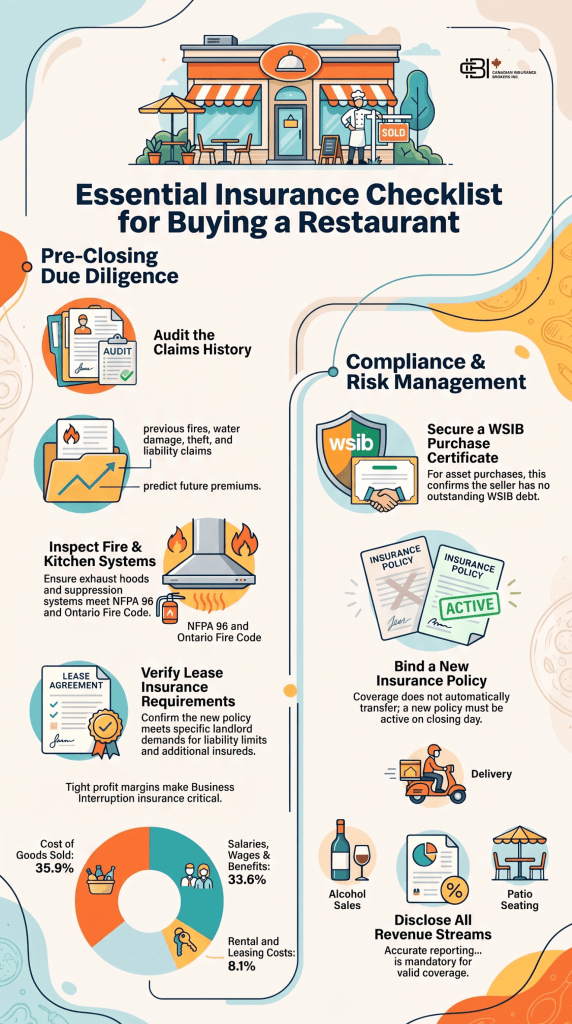
Statistics Canada reported that food services and drinking places had a 4.1% operating profit margin in 2024, up from 3.6% in 2023.
Operating expenses represented a substantial portion of revenue. Among total industry expenses:
- 35.9% came from cost of goods sold
- 33.6% came from salaries, wages, commissions and benefits
- 8.1% came from rental and leasing costs
From an insurance perspective, those percentages matter. A lengthy shutdown can occur while payroll, rent and other expenses continue, which is why buyers should calculate business interruption coverage rather than treating it as an optional afterthought.
The market is also changing by restaurant type. Statistics Canada found that limited-service restaurants increased operating revenue by 7.7% in 2024, while full-service restaurants increased by 1.4%.
The restaurant concept you are purchasing can therefore matter to both the business plan and insurance review.
Buying an Existing Restaurant in Oakville
Oakville has an active restaurant market, particularly in Downtown Oakville, Bronte Village, and Kerr Village. Town data estimates that 4.7% of Oakville’s workforce works in accommodation and food services, compared with 5.5% across Ontario.
Oakville’s business-size data also shows:
- 64.14% of employer businesses have 1 to 4 employees
- 14.85% have 5 to 9 employees
- 9.54% have 10 to 19 employees
- 7.11% have 20 to 49 employees
Staffing matters because payroll and operating scale can affect insurance and workplace obligations.
Patios are another important consideration in Oakville’s restaurant districts. The Town operates a Seasonal Commercial Patio Program covering areas including Downtown Oakville, Bronte Village, and Kerr Village.
For buyers, review whether a patio is included in the lease, how alcohol is served, seasonal operations, municipal permits, and whether the patio is disclosed to the insurer. For example, Oakville currently requires private-property seasonal patios to carry at least $2 million in Commercial General Liability insurance and name the Town as an additional insured where the program requirements apply.
Location should therefore be reviewed alongside the restaurant’s actual operations, not just the purchase price.
What Should You Check on the Certificate of Insurance?
A Certificate of Insurance may be required by the landlord, lender, franchisor, or another party.
Before closing, confirm that the certificate accurately reflects:
- Correct legal business name
- Correct operating name where applicable
- Restaurant address
- Required liability limit
- Effective date
- Expiry date
- Required additional insured
- Relevant policy information
Do not rely on the seller’s old Certificate of Insurance as evidence that the purchaser is insured.
The certificate should reflect the buyer’s actual insurance arrangement.
Insurance Tips Before Buying an Existing Restaurant
Start the Insurance Review Before Closing
Do not leave restaurant insurance until the day before possession. Underwriters may need detailed information about cooking, fire protection, the building, sales, equipment and claims history.
Tell the Broker What You Are Changing
If you are buying an Italian restaurant but turning it into a late-night bar, the risk is changing significantly.
Disclose changes to:
- Menu
- Cooking
- Alcohol
- Hours
- Entertainment
- Seating
- Delivery
- Catering
- Renovations
Get the Claims Information Early
A serious previous loss may generate additional underwriting questions. Finding out about it early gives you more time to investigate.
Photograph the Restaurant Before Taking Possession
Create a record of equipment, furniture, kitchen areas, inventory and other assets included in the purchase.
Build an Equipment Schedule
Record the make, model, age and estimated replacement value of major equipment where possible.
Review the Lease With the Insurance Quote
The insurance program and lease should agree on important requirements such as liability limits and additional insured wording.
Do Not Forget the Closing Date
Make sure the new insurance effective date aligns with when the buyer actually assumes the risk.
Review Coverage Again After Renovations
If you renovate immediately after purchasing the restaurant, tell your broker. New equipment, increased property values, layout changes and different cooking operations can affect the policy.
Why Work With James Inwood
Buying an existing restaurant creates a different insurance situation from simply renewing a restaurant you already operate.
The buyer needs to understand the property being acquired, kitchen equipment, claims history, lease, fire protection, alcohol exposure, employees, business interruption needs and ownership structure before the transaction closes.
James Inwood Insurance works with restaurants, bars and other food businesses across Oakville and Ontario to review Commercial General Liability, property, equipment breakdown, liquor liability, food-related exposures, cyber and business interruption coverage.
Get a restaurant insurance quote or book a meeting with James Inwood before your restaurant purchase closes.

Frequently Asked Questions
Do not assume the seller’s policy transfers to you. The buyer should arrange coverage for the purchasing entity, restaurant location, operations, property, revenue and other exposures, with the appropriate effective date.
Yes. Available claims information can help identify previous fires, water damage, liability incidents, theft and other losses that may be relevant to the purchase and insurance underwriting.
Review Commercial General Liability and liquor liability coverage and make sure the insurer knows alcohol is served. You should also confirm the applicable liquor licensing and ownership-change requirements with the AGCO.
Determine whether the business and employees have WSIB obligations and how the transaction affects them. For an asset purchase, WSIB recommends obtaining a purchase certificate before the sale date.

James Inwood is an Ontario insurance broker who works with restaurants, bars, food businesses, retailers, contractors, consultants and other commercial clients across Oakville and Ontario. He helps business owners review liability, property, equipment, liquor liability, cyber, business interruption and other insurance when starting, purchasing or expanding a business.
James Inwood, Insurance Broker
RIBO licensed | LinkedIn